Is Your York County Basement Ready for the Next Big Rain?
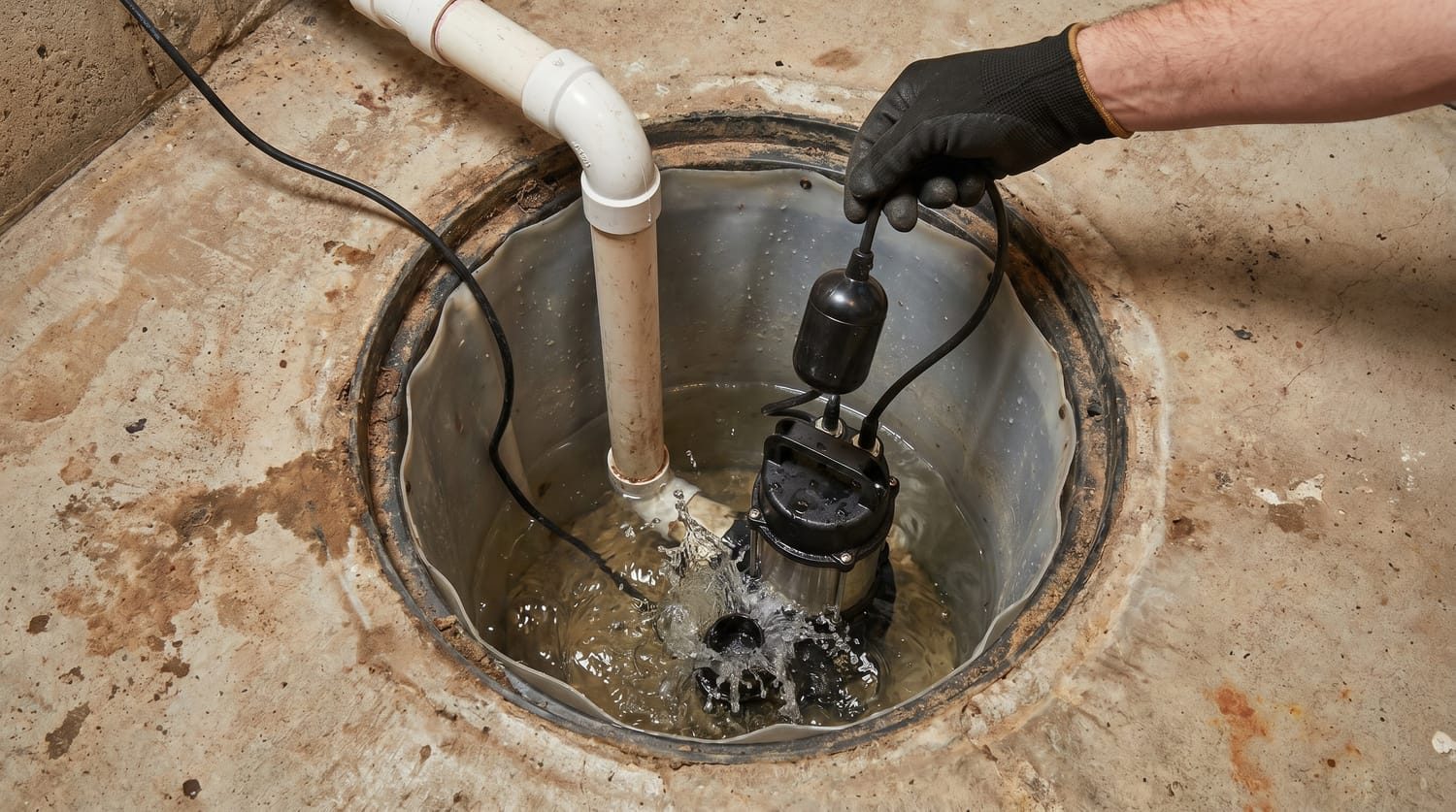
Before the next big storm, pour a five-gallon bucket of water into the sump pit and make sure the pump kicks on and the pit does not refill when it stops. Then walk the foundation walls: thin vertical cracks are usually harmless shrinkage, but any horizontal crack, any crack wider than a quarter inch, or a wall that is bowing inward needs a structural engineer, not a tube of caulk.
York County basements take a beating: heavy summer downpours, winter freeze-thaw, and in the limestone belts around York and Hanover, ground that moves. The Pennsylvania Geological Survey published a county-wide inventory of York County sinkholes and karst features in 1995, and the DCNR still recommends sinkhole insurance on carbonate bedrock. Most basement problems are more ordinary than that, and come down to two things: is the pump working, and is the wall moving?
How do I test my sump pump without waiting for a storm?
Dump water in it. Fill a five-gallon bucket, pull the pit cover, and pour. The float should rise, the pump should hum on within a few seconds, and the water level should drop and stay down. If nothing happens, lift the float by hand; if the pump runs then, the float was stuck or the pit needs cleaning. Family Handyman recommends this test at least once a year, more often if the basement has ever taken water.
Listen after the pump shuts off. If water runs back into the pit, or the pit refills right away, the check valve on the discharge line has failed. It is a one-way flap near the pump, cheap to replace, and without it the pump short-cycles itself to death.
How long does a sump pump last and do I need a battery backup?
Plan on seven to ten years. Family Handyman puts reliable service at seven to ten years with maintenance, and a cheap pump under heavy use may not make five. Put a sticker with the install date on the pit lid; if you bought a house with a pump and nobody knows how old it is, budget for a new one.
The most common reason a sump pump fails is not the pump. It is the power going out in the same storm that is filling the pit. A battery backup pump sits in the same pit and takes over on a 12-volt battery; Bob Vila prices a sump pump with battery backup at about $1,220 installed (as of January 2024), and the battery itself needs replacing about every five years. If the basement is finished or the house has ever flooded, I think it is the best money you can spend down there.
Two more things a good installer will get right. The discharge line has to carry water well away from the foundation; dumping it beside the house just recycles it back through the footer drain and into the pit. And in winter, disconnect any flexible extension hose on the discharge, because the corrugations hold water, freeze, and block the line when you need it most. The pit should also have a gasketed, mechanically fastened lid, which keeps soil gases, including radon, out of the house.
Which foundation cracks are normal and which are not?
Direction and width tell most of the story:
| What you see | What it usually means | What to do |
|---|---|---|
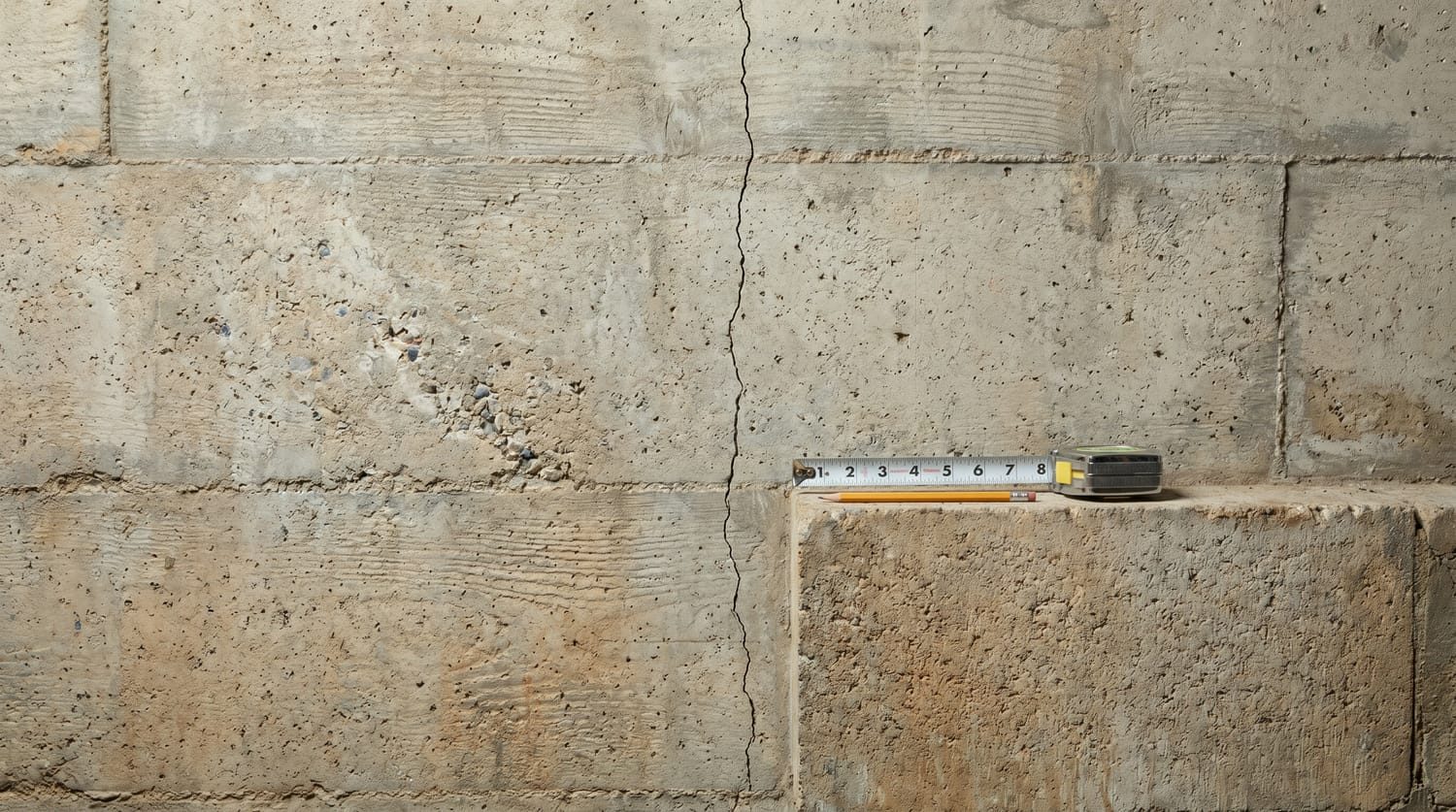
| Vertical hairline crack, under 1/8 inch, poured wall | Concrete shrinkage as it cured; very common | Seal it against water, mark the ends with a pencil and date, check in six months |
| Vertical or diagonal crack that leaks | Water is finding the path | Fix drainage outside first, then have it injected |
| Stair-step crack following the mortar joints in a block wall | Differential settlement or soil pressure; block does not step-crack without movement | Monitor if narrow and stable; engineer if wider than 1/4 inch, offset, or growing |
| Horizontal crack, often mid-height, wall bowing in | Hydrostatic or frost pressure from saturated soil pushing the wall | Structural engineer now; this is the crack that fails walls |
| Any crack over 1/4 inch, or one edge higher than the other | Significant movement has already happened | Structural engineer before any contractor |
The rule This Old House gives is the one to remember: any crack that appears suddenly is not normal, and any crack that keeps growing in width or length is not normal. A horizontal crack in a block wall with inward buckling is, in the words of one Pennsylvania structural engineering firm, an over-stressed and failing wall that warrants repair as soon as possible.
What actually stops water from getting to the wall?
Almost every wet basement and bowing wall I have seen in York County starts on the outside with roof water. Gutters that overflow and downspouts that dump at the foundation soak the backfill, and saturated backfill is what pushes on the wall and floods the pit. Penn State Extension's first recommendation for flood control on your own lot is to redirect downspouts out to lawn and garden areas. Extend them, grade the soil so it falls away from the house, and keep the gutters clear. That costs a weekend and prevents most of the repairs on this page.
What is your York County home worth today?
Assessed value, Zestimate and asking price are three different numbers. Get the one that matters, from someone who sells here.
Get my home valueOr call or text Phil directly: 717-356-9413.
Questions people ask
Does a crack in the foundation have to be disclosed when I sell?
Pennsylvania's seller disclosure statement asks about known material defects, including water and structural problems you are aware of. A repaired crack with an engineer's letter is a much easier conversation than an unexplained one.
Can I fill a foundation crack myself?
A stable vertical hairline in a poured wall can be sealed with an epoxy or polyurethane injection kit. Do not seal a horizontal or widening crack and forget about it; you are hiding the evidence of a wall that is moving.
Is a water-powered backup better than a battery?
It never runs out of charge, but it uses municipal water pressure, does nothing on a well, and can cost real money in water while it runs. Most York County homes on public water can use either; on a well, battery is the only option.
If you are not sure what you are looking at in your basement, send me a photo. I see a lot of foundations, and I will tell you honestly whether it is a caulk job or an engineer job. Call or text me at 717-356-9413. This is general information, not engineering advice.
Sources: Family Handyman, How to Test Sump Pumps · Family Handyman, How Long Do Sump Pumps Last? · Family Handyman, Homeowner's Guide to Sump Pump Battery Backups · Bob Vila, How Much Does a Sump Pump Cost to Install? (Jan. 2024) · U.S. DOE Building America Solution Center, Drain or Sump Pump in Basements · This Old House, Foundation Cracks: What Is Normal and When to Worry · Local Service Group, Cracks in Your Foundation: Which Ones Are Serious · InspectApedia, Diagonal or Step Cracks in Concrete Block Foundations · Penn Valley Engineering, Failing Basement Foundation Walls · Penn State Extension, Stormwater Flood Control · PA Geological Survey, Sinkholes and Karst-Related Features of York County (1995) · PA DCNR, Sinkholes · Acculevel, How to Keep Sump Pump Discharge from Freezing