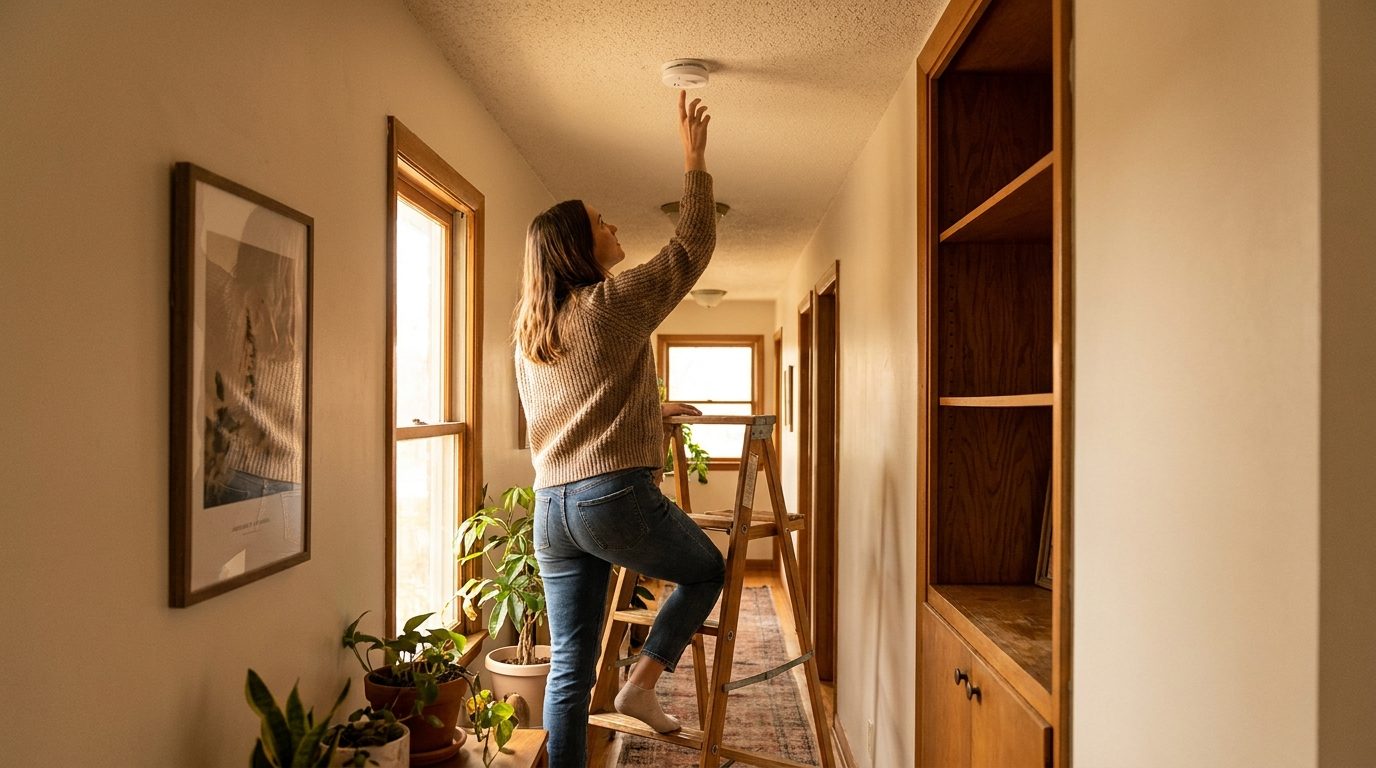
Which Ten-Minute Safety Checks Prevent House Fires and Shocks?
Three checks, ten minutes, once a season: read the manufacture date on the back of every smoke and CO alarm and replace smoke alarms at 10 years and CO alarms at the age their maker prints on them, press Test on every GFCI outlet and confirm it kills the power, and check whether your dryer is taking two cycles or running hot, which means the vent line is clogged. Those three things cover the fires and shocks that actually happen in houses.
I see the same three findings on York County inspection reports over and over: alarms past their date, GFCIs that do not trip, and a dryer vent packed with lint. None costs much to fix, and all of them get written up, so doing the checks before you list is both a safety habit and a cleaner sale.
How old are my smoke and CO alarms, and when do they expire?
Smoke alarms have to be replaced 10 years from the manufacture date, no matter how well the test button works, because the sensor wears out while the horn still sounds. Twist each one off its bracket; the date is stamped on the back. If the alarms came with the house, the clock started with the previous owner.
- Smoke alarms: replace at 10 years. Test monthly. Replace batteries yearly unless the unit has a sealed 10-year battery. Put one inside and outside every bedroom and on every level, including the basement, and choose interconnected alarms so that when one sounds they all sound. The U.S. Fire Administration says you may have less than two minutes to get out once one goes off.
- Carbon monoxide alarms: one on every level and outside sleeping areas. Kidde says its CO alarms have a proven life of seven to ten years depending on the model, with older units at seven, so read the date on the back and go by what the manufacturer prints. The CPSC counts more than 200 U.S. deaths a year from accidental CO poisoning tied to consumer products.
Pennsylvania's Carbon Monoxide Alarm Standards Act (Act 121 of 2013) requires a seller to disclose information about CO detector installation on the property disclosure statement at sale. Some York County boroughs go further with their own ordinances; North York Borough, for example, requires smoke detectors in every bedroom and the halls leading to bedrooms and a CO detector on each floor of every residential unit. Check your municipality's code before you list.
How do I test a GFCI outlet and where should I have them?
Press Test. Whatever is plugged in should die, and the Reset button should pop out; press Reset and the power comes back. If nothing happens when you press Test, or the outlet stays dead after Reset, the device has failed and needs replacing. The CPSC says to test every GFCI at least once a month.
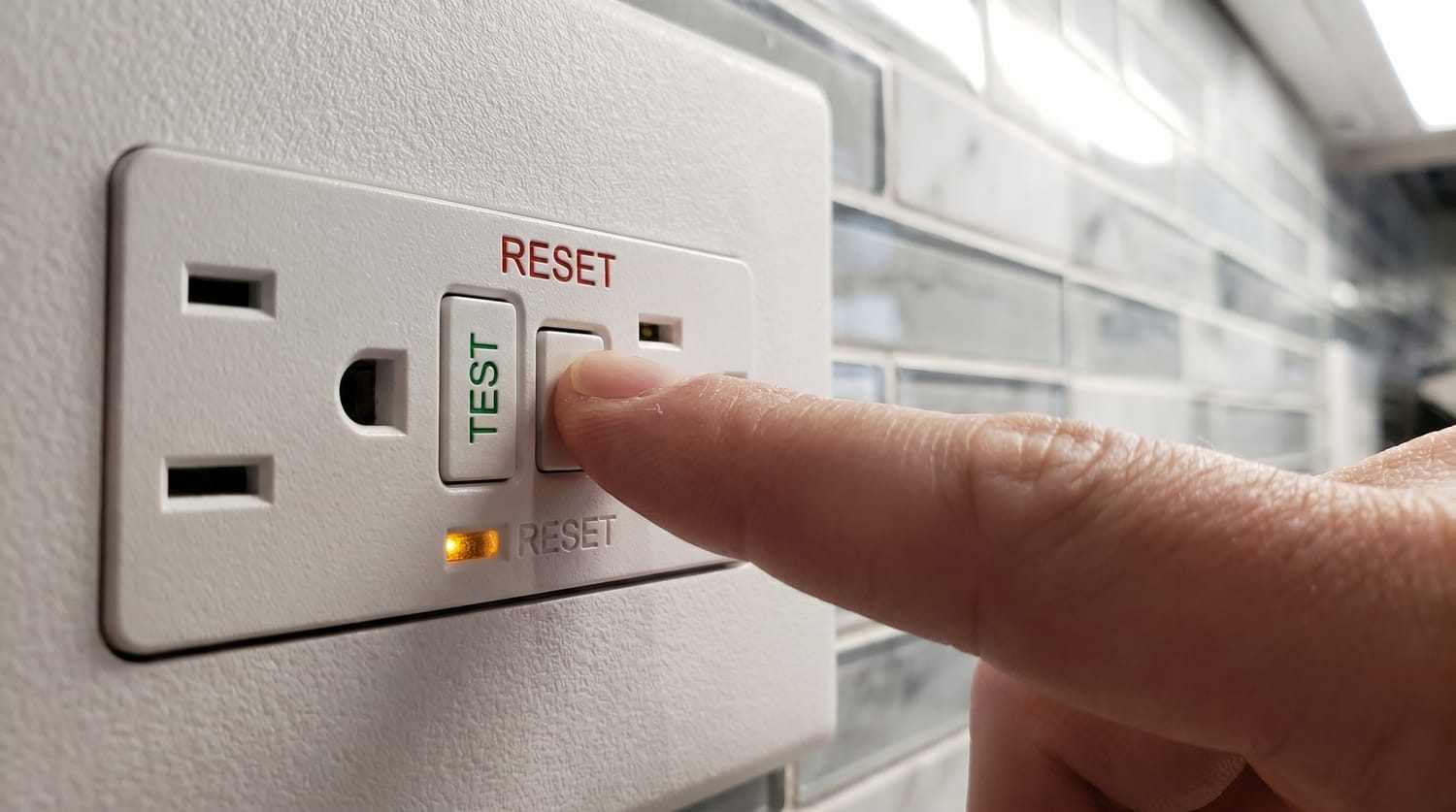
A GFCI watches the current going out and coming back on a circuit; a difference as small as 0.006 amps, the kind you get when electricity is running through a person, and it cuts the power faster than a blink. The CPSC has estimated that GFCIs in household branch circuits could prevent over two-thirds of the roughly 300 electrocutions that happen in and around homes each year. Under the 2020 National Electrical Code, section 210.8(A), new work in a home needs GFCI protection for receptacles in bathrooms, garages, outdoors, crawl spaces, basements (finished or not), kitchens, within six feet of any sink or tub, laundry areas and other damp locations. Pennsylvania moved its Uniform Construction Code to the 2021 international codes on January 1, 2026. An older house does not fail for lacking them, but a buyer's inspector will note every wet-area outlet without one, and swapping in GFCI receptacles at the kitchen, baths, garage and outside is cheap insurance.
Is my dryer vent a fire risk?
If the clothes take more than one cycle, the top of the dryer is hot to the touch, or lint is building up around the outside vent hood, yes. Those are the three signs the vent line, not the screen, is clogged.
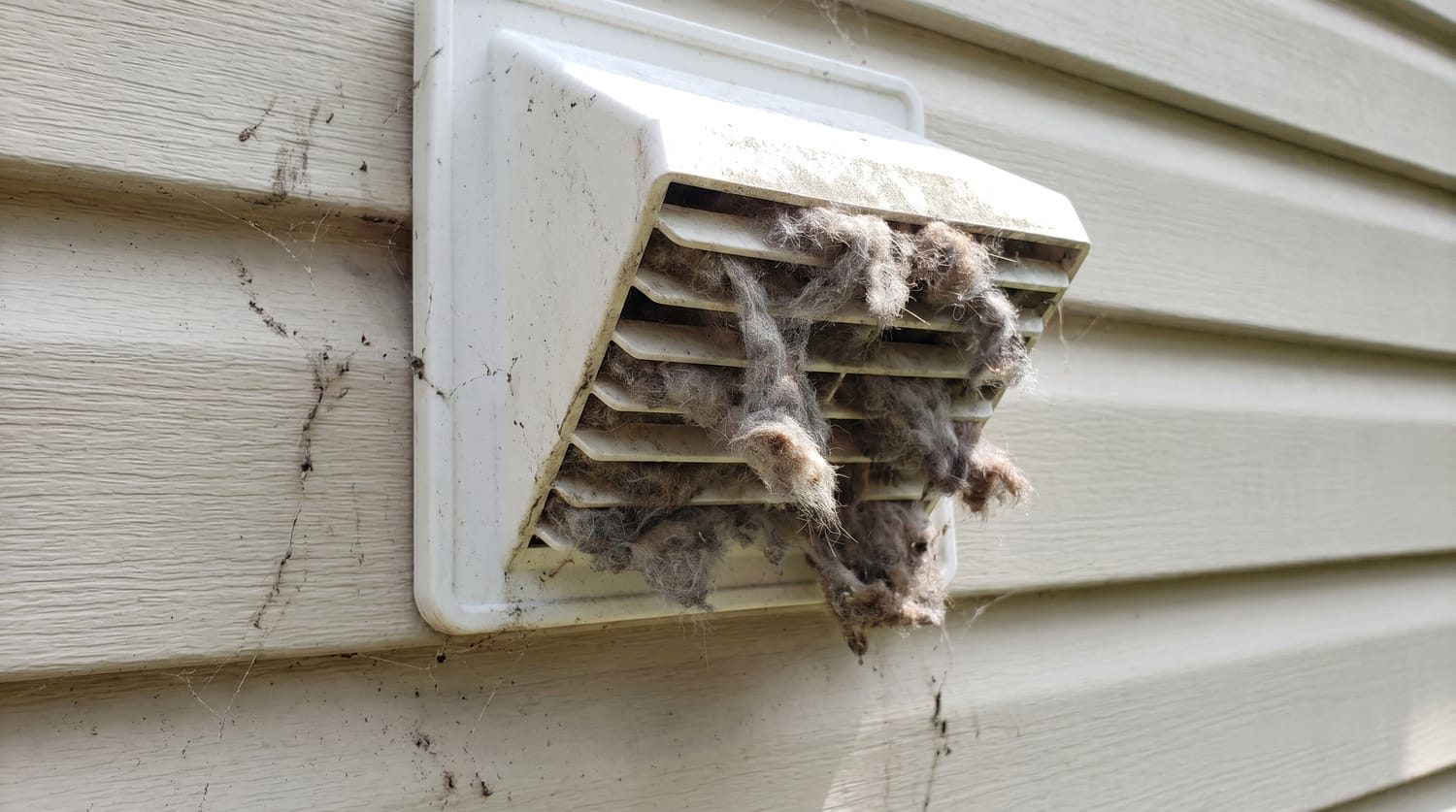
The numbers from the National Fire Protection Association are worth knowing. From 2010 to 2014, U.S. fire departments responded to an average of 15,970 home fires a year involving clothes dryers or washing machines, and 92 percent of them involved the dryer. The leading factor was failure to clean, at 31 percent of fires, and the material that caught first was most often dust, fiber or lint. The U.S. Fire Administration's own study found dryer fires peak in January.
The fix is unglamorous. Clean the screen every load. Pull the dryer out, disconnect the duct, and clean it end to end with a vent brush or shop vac, then clear the exterior hood so the flap swings free. If the duct is white vinyl or thin foil accordion, replace it with rigid or semi-rigid metal while you are there. If the run is long or goes through the roof, hire a vent-cleaning company.
What is your York County home worth today?
Assessed value, Zestimate and asking price are three different numbers. Get the one that matters, from someone who sells here.
Get my home valueOr call or text Phil directly: 717-356-9413.
Questions people ask
Are hardwired smoke alarms exempt from the 10-year rule?
No. Hardwired alarms have the same sensor life. They usually have a backup battery to change yearly, and the whole unit still gets replaced 10 years from the manufacture date.
What if my GFCI trips constantly?
It is doing its job. Something on that circuit is leaking current: a worn appliance, moisture in an outdoor box, or a bad cord. Unplug things one at a time to find it rather than swapping the outlet for a standard one.
Does York County require a smoke detector certificate to sell a house?
There is no county-wide rule. State law requires CO detector disclosure on the seller disclosure form, and individual boroughs and townships set their own detector ordinances and inspection rules, so ask your municipality's code office before listing.
If you are getting ready to sell, these three checks are on my pre-listing walk-through list, and I am glad to go through them with you. Call or text me at 717-356-9413. This is general information, not legal, electrical or fire-safety advice; for wiring, hire a licensed electrician.
Sources: U.S. Fire Administration, Smoke Alarms · CPSC, Change Smoke and CO Alarm Batteries (2023) · CPSC, Carbon Monoxide Information Center · Kidde, When Should I Replace My Carbon Monoxide Alarm? · Pennsylvania Act 121 of 2013, Carbon Monoxide Alarm Standards Act · North York Borough Code 91.46, Smoke and Carbon Monoxide Detectors · CPSC Document 99, The GFCI · 2020 NEC 210.8(A), GFCI Protection, Dwelling Units · Penn State PHRC, PA Uniform Construction Code · NFPA, Home Fires Involving Clothes Dryers and Washing Machines (2017) · U.S. Fire Administration, Clothes Dryer Fires in Residential Buildings (2008-2010)